Geewin Matches – Safety matches industry



Safety Matches Exporter for Nigeria: The Complete 2026 Buyer's Guide
Posted on Oct 12, 2026 | by Geewin Matches
Every night, millions of Nigerian homes, shops and street stalls reach for the same small item. A box of matches.
That demand has made Nigeria the biggest buyer of Indian matches on the planet. So if you are searching for a safety matches exporter for Nigeria, you are looking in the right place at the right time.
But picking the wrong supplier costs real money. Delays at the port. Rejected paperwork. Boxes that fail to strike in humid weather.
This guide shows you how to avoid all of that. We are Geewin Matches, a safety matches manufacturer and exporter at Kovilpatti, India, shipping to Africa for years. Here is what we have learned.
QUICK ANSWER
A good safety matches exporter for Nigeria is a factory-direct manufacturer that holds ISO certification, packs to UN 1944 shipping rules, supports Form M and customs paperwork, offers private labelling, and can show proof of past Africa shipments.
Why Nigeria Is the Biggest Market for Indian Matches
Let’s start with the numbers.
According to IndexBox, India exported about 53,000 tons of matches in 2023, worth roughly $76 million. That was 38% more than 2022.
And where did the biggest share go? Nigeria.
- Nigeria took about 8,800 tons, around 17% of all Indian match exports.
- That is more than double the volume sent to Ghana, the second largest buyer (about 4,400 tons).
- By value, Nigeria (about $11 million), Benin ($5.8 million) and Ghana ($5 million) made up 29% of the total.
Older trade records tell the same story. A shipment database that tracks Indian customs entries showed Nigeria as the largest importer of safety matches, at about 20% of exports, with most cargo moving through Tuticorin port (Zauba export data). Note that dataset is older, so treat it as direction, not a current figure.
Why does Nigeria buy so much? Three simple reasons:
- Huge population. Matches are a daily necessity for cooking, lighting and religious use.
- Unreliable power in many areas. Candles, kerosene lamps and gas stoves all need a flame.
- Price sensitivity. Nigerian retailers sell matches in tiny, cheap units, so low cost per box matters.
What does this mean for you? Competition. Because Nigeria is such a large market, many suppliers chase the same buyers. The winners are the ones who offer steady quality, honest communication and smooth paperwork. Price alone rarely wins repeat orders.
Who Buys From a Safety Matches Exporter in Nigeria?
Knowing your buyer type helps you pick the right supplier and the right order size.
- Importers and wholesalers. They buy full containers and sell on to regional distributors. Price per carton and consistency matter most.
- Distributors and retail chains. They want steady supply, clean packaging and reliable delivery dates.
- Brand owners. They want a private label product with their own artwork, so they need a factory that can print and customise.
- Hotels, restaurants and caterers. They buy kitchen and long stick matches in bulk, often through a local distributor.
Whichever group you are in, the same rule applies. Work with a maker who answers fast, quotes clearly and ships what you approved.
Many Nigerian buyers start with one sample order. Then they move to a full container once quality is proven. That is a smart way to begin, and any serious exporter should welcome it.
Which Safety Matches Sell Best in Nigeria?
Not every match suits every shelf. Here is how the main types perform in the Nigerian market.
1. Cardboard safety matches
The export workhorse. Light, cheap to ship and easy to print. Typical export cartons seen across Indian suppliers use boxes around 51 x 35 x 14 mm with 40 or 45 sticks per box. Boards of about 285 to 290 GSM for the outer box are common.
Best for: mass retail, kiosks, wholesalers and distribution across Lagos, Kano, Onitsha and Port Harcourt.
2. Veneer (wooden) safety matches
Stronger box, better in wet weather. A wooden outer and inner box resists damp, which matters in the humid south. Slightly higher cost, premium feel.
3. Wax safety matches
Wax-coated sticks burn longer and hold up when damp. Popular where moisture is a problem or where users want a steadier flame.
4. Kitchen matches
Bigger boxes with more sticks. Good for restaurants, caterers and households that cook with gas.
5. Long stick (barbecue) matches
Longer stick, safer lighting of grills, stoves and candles. A growing niche for suya spots, hotels and gas cookers.
What Makes a Good Safety Matches Exporter for Nigeria?
Anyone can say “we export to Africa”. Few can prove it. Use this checklist when you compare suppliers.
- Factory-direct. You deal with the maker, not a middleman adding margin.
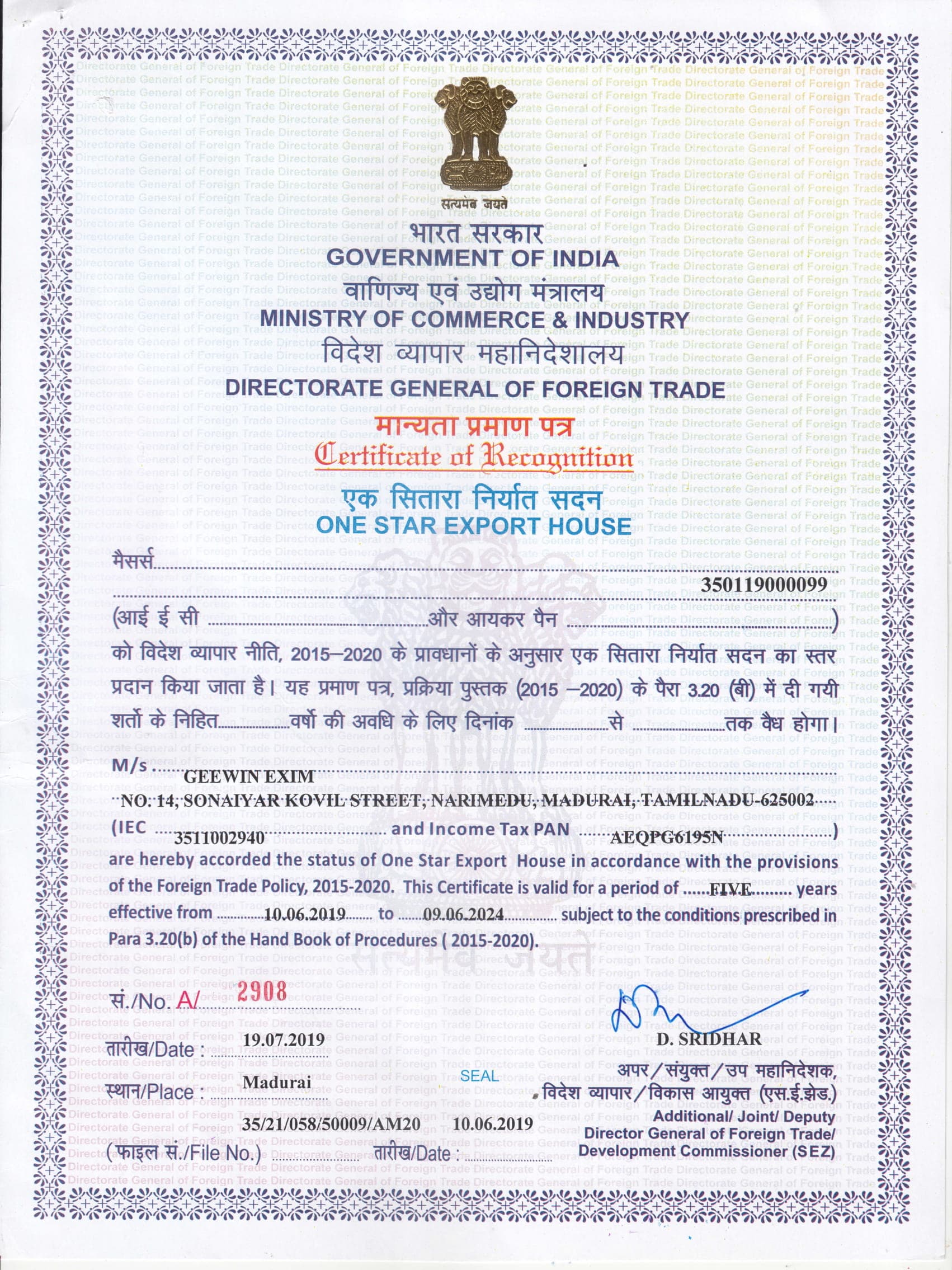
- Real certificates. Ask for ISO 9001 and export body membership. Geewin shows TUV SUD ISO 9001, CAPEXIL, FIEO and chamber of commerce records on our certificates page.
- Past Africa shipments. Ask for proof, such as bills of lading with buyer names hidden.
- Consistent quality. A buyer in Mexico asked us to keep the product consistent order after order. Nigerian buyers want the same.
- Fast, clear communication. Same-day replies on price, samples and documents.
- Paperwork support. Commercial invoice, packing list, certificate of origin, and help with Form M details.
- Private label capability. Your brand on the box, your artwork, your sizes.
Nigeria Import Rules: What Your Buyer Needs
This is the part most suppliers skip. And it is the part that causes the most delays.
Your Nigerian buyer (the importer) must complete several steps before goods can clear the port. Here is the usual path:
- Register the company. The importer needs a registered Nigerian business and an authorised dealer bank.
- File a Form M. It is the import declaration, filed through the dealer bank on the Nigeria Single Window. As one guide puts it, no Form M, no importation. The supplier should only ship after Nigeria Customs registers it (Sterling Bank Form M FAQ).
- Get a product certificate and SONCAP certificate if your product requires it. The Standards Organisation of Nigeria runs the SONCAP programme. Guidance from trade advisers says the Product Certificate needs things like ISO 17025 lab test reports and an ISO 9001 certificate (Exports to Nigeria guide).
- Obtain the PAAR. The Pre-Arrival Assessment Report is issued by Nigeria Customs and is required to clear imported goods (Mondaq legal overview).
- Pay duty and VAT. Standard VAT on imports is 7.5%, applied on the customs value (cost, insurance, freight) plus any duties (Goods Across Borders).
Our advice? Ask your Nigerian buyer to speak with a licensed clearing agent before the order is placed. It costs little and saves weeks.
Packing and Shipping Safety Matches to Nigeria
Matches are dangerous goods in transport. Respect the rules and your cargo moves smoothly.
Safety matches are classed as UN 1944, hazard class 4.1 (flammable solids). That means correct labelling, dry storage and compliance with sea freight dangerous-goods rules (Alibaba export guide).
What good packing looks like:
- Strong outer cartons, tightly sealed, moisture-protected.
- Shrink-wrapped bundles to stop boxes rubbing and igniting.
- Clear UN 1944 and class 4.1 labels on every carton.
- Dry container with silica gel for the humid ports.
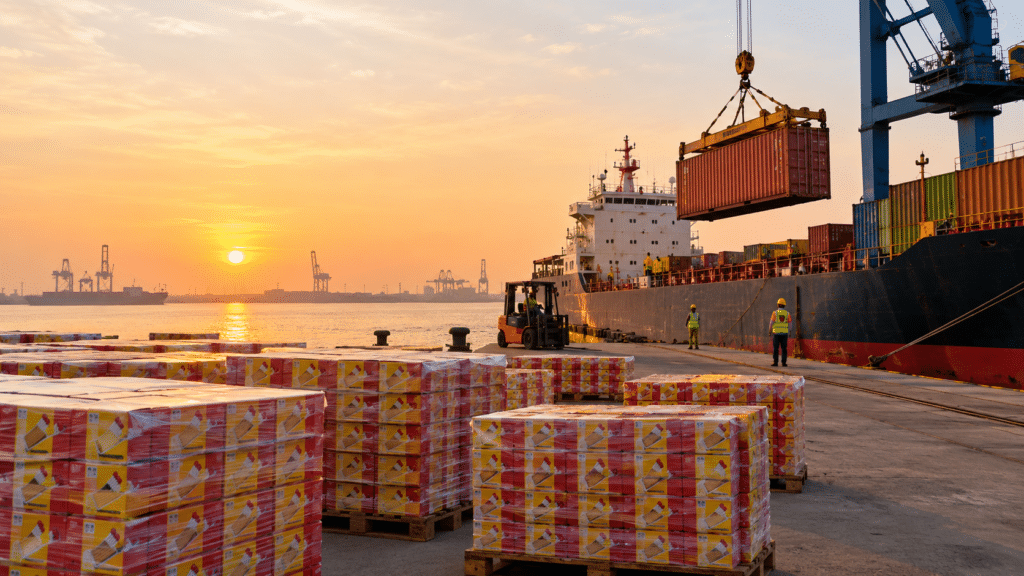
- Sea freight from Tuticorin, with the booking handled by a dangerous-goods-approved shipper.
Tip: Lagos ports are humid. Damp ruins matches faster than anything else, so ask your supplier how they protect cartons from moisture.
Documents Your Exporter Should Send
Paperwork errors cause more port delays than bad matches do. A professional exporter will prepare these for you:
- Commercial invoice. Lists the goods, quantity, price and terms. It must match your Form M details.
- Packing list. Shows cartons, weights and dimensions.
- Bill of lading. The shipping line’s receipt and contract for the cargo.
- Certificate of origin. Confirms the goods were made in India. Indian exporters often get this through a chamber of commerce.
- Manufacturer documents. Quality certificates and test records, if your product category needs them.
Check every name, address, quantity and product description. A single typo can trigger a query from customs. Ask your supplier to send draft documents for approval before the ship sails.
At Geewin, we send draft documents early so your clearing agent has time to review. It is a small step that saves a lot of stress.
Private Label Matches for Nigerian Brands
Want your own brand on the shelf? Private labelling is the fastest way to build a name.
With a private label order you choose the box artwork, size, stick count and match type. Distributors in Nigeria use this to stand apart from generic imports.
What to prepare:
- Your logo and artwork in print-ready format.
- Target box size and stick count.
- Order volume per design.
- Local language needs, if any, for the label.
How to Test Safety Match Samples Before You Order
Never place a container order without testing samples. It takes an afternoon and protects your whole investment.
Run this simple test on every sample:
- Strike test. Strike 50 matches on the box. Count how many light on the first stroke. A good batch lights almost every time.
- Burn time. Check that the flame lasts long enough to light a stove or candle.
- Damp test. Leave a few boxes in a humid room for 48 hours, then strike again. This copies Nigerian weather.
- Box strength. Press, bend and shake the box. The striking surface should stay intact and not peel.
- Print quality. Check colours, spelling and sharp edges on the artwork.
- Stick count. Open a few boxes and count. Short counts hurt your margin.
Keep notes and photos. If a later batch behaves differently, you have proof to show the factory.
Why does damp matter so much? Matches are sensitive to moisture. Humid coastal areas in southern Nigeria can wreck weak packaging and soft sticks. That is why wax and veneer options often do well there, and why dry packing at the factory is a must.
FOB, CIF and Payment Terms: Plain English
Your quote will use shipping terms. Here is what they mean in simple words.
- FOB (Free on Board). The supplier loads the goods on the ship at the Indian port. You pay freight and insurance from there.
- CIF (Cost, Insurance and Freight). The supplier pays freight and insurance to the Nigerian port. You pay port charges, duty and clearance.
As noted earlier, Nigerian VAT is charged on the CIF value plus duties. So the price on your quote affects your final landed cost.
On payment, common options include advance payment, partial advance with the balance against documents, and letters of credit. Discuss this early. Nigeria’s Form M process runs through your bank, so your bank will also guide the payment method.
Tip: ask for a landed cost estimate, not just the factory price. Add freight, insurance, port fees, duty, VAT and local transport. Then compare suppliers fairly.
What Affects the Price of Matches from India?
Everyone asks “what is your price per carton?” The honest answer: it depends. Here is what moves the number.
- Match type. Wax and veneer cost more than cardboard.
- Box size and stick count. More sticks, more cost.
- Board quality and printing. Heavier board and full-colour print add cost.
- Order size. Bigger containers lower the cost per box.
- Freight and insurance. Sea freight rates change often.
- Payment terms. Letter of credit versus advance payment can affect price.
Ask every supplier for a quote in the same format: same type, same stick count, same incoterm (FOB or CIF). Only then can you compare.
Your Pre-Order Checklist
Before you pay a deposit, tick off these points:
- Supplier is a manufacturer with a visible factory process and certificates.
- Samples tested for strike, burn and damp resistance.
- Written quote with match type, stick count, box size, incoterm and lead time.
- Form M plan agreed with your bank and clearing agent.
- Packing and UN 1944 labelling confirmed in writing.
- Artwork approved by you before printing starts.
- Payment terms and delivery schedule agreed.
Save this list. Use it with every supplier, including us.
5 Mistakes Nigerian Buyers Make When Importing Matches
- Ordering before the Form M is registered. Goods can be held up or penalised.
- Choosing on price alone. The cheapest match often fails to strike when damp.
- Skipping samples. Always test strike quality, burn time and box strength first.
- Ignoring packaging rules. Wrong dangerous-goods labels can get cargo refused.
- Buying from a trader, not a factory. You pay extra and lose control of quality.
How Geewin Matches Works with Nigerian Buyers
We run a fully automated, modern factory at Kovilpatti and ship to buyers across Africa, the Middle East, Asia and Latin America. We make cardboard, wax, kitchen, long stick and veneer safety matches, and we offer private labelling.
Here is how a typical order goes:
- You tell us the match type, size and quantity.
- We send samples and a clear quote.
- You confirm your Form M details with your bank and clearing agent.
- We produce, pack to UN 1944 rules and book shipment.
- We send the shipping documents so your agent can prepare clearance.
One buyer from Haiti told us the product “turned out exactly how we would like”. That is the standard we hold ourselves to for every market, including Nigeria.
Frequently Asked Questions
Which country is the biggest buyer of Indian safety matches?
Nigeria. It took about 17% of India’s match exports by volume in 2023, according to IndexBox.
Do I need a Form M to import matches into Nigeria?
Yes. Every commercial import needs a Form M, filed through an authorised dealer bank before the supplier ships.
Are safety matches dangerous goods for shipping?
Yes. They are UN 1944, hazard class 4.1, and need correct labelling and dry storage.
Can I get my own brand printed on the matchboxes?
Yes. Geewin offers private labelling with custom artwork, sizes and stick counts.
What is the minimum order quantity?
[CONFIRM Geewin’s real MOQ, for example one 20-foot container or a set number of cartons. Do not guess.]
How long does shipping from India to Nigeria take?
[CONFIRM with Geewin’s freight partner. Give production time plus typical sea transit to Lagos (Apapa/Tin Can), and note that port delays vary.]
Final Thoughts: Choose a Safety Matches Exporter You Can Trust
Nigeria is the largest market for Indian matches, and that makes the supplier you choose very important.
Look for a factory-direct maker. Check the certificates. Plan the Form M and customs steps early. Protect your cargo from damp. And always test samples first.
Ready to start? Geewin Matches can send samples and a quote for Nigeria this week.
