Geewin Matches – Safety matches industry



Long Matches South Africa
Posted on Oct 06, 2026 | by Geewin Matches
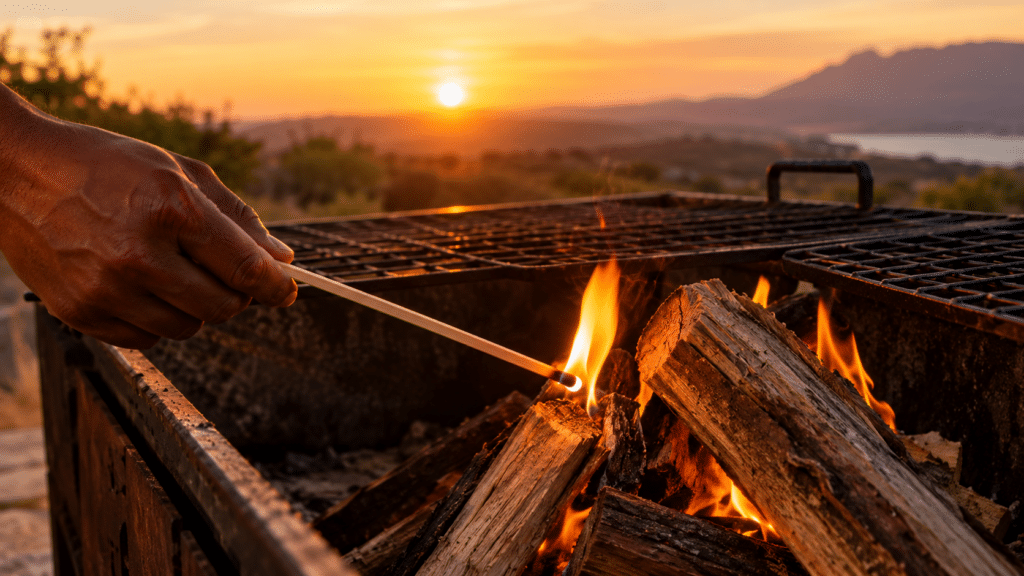
Every Heritage Day, millions of South Africans light a fire. Almost none of them think about the matchbox in their hand. If you import or sell long matches South Africa shoppers reach for, you should.
Here is the opportunity. Local brands have owned the shelf for a century. Yet buyers who want branded matches South Africa can use for a restaurant, lodge, braai brand or retail label still struggle to find a factory that prints a logo on a long box at a sensible order size.
This guide is short and practical. You will get the specs, the paperwork, the cost levers and the mistakes to avoid.
Key takeaways
- South Africa loves fire: 80% of surveyed consumers regularly braai, and about 30% light coals weekly.
- India shipped about US$676,000 of matches to South Africa in 2024, so the trade lane is real but small.
- Long matches (50 mm to 280 mm) win on safety, reach and gifting. Wax and wooden both have a role.
- Private label is the easiest way into the market: your box, your logo, your stick count.
- Check SARS registration, HS code 3605 and dangerous-goods shipping before you place an order.
Why long matches matter in South Africa
Start with the culture. A 2025 BrandMapp release quoting research for Spar and Libstar says 90% of South Africans have a built-in braai or a dedicated braai spot. It adds that 80% regularly braai and about 30% cook on coals at least once a week.
Then add the date. National Braai Day falls on 24 September, and the organisers estimate 15 to 20 million people take part each year. Fire is a habit, not a hobby.
Power cuts add a second driver. Business Report noted that many households looked for alternative cooking methods as load shedding continued. A long match is a cheap, dependable tool for gas rings, braais and candles.
An honest caveat. IndexBox reports the South African matches market fell for a third year running in 2023. A shrinking pool rewards products that stand out. Long and branded formats do exactly that.
Who you are up against on the South African shelf
South Africa has a long match-making history. The first recorded factory, the South African Match Factory, opened at Wynberg in the Cape in 1884. (Source: Phillumeny) Over time the market consolidated around one dominant name.
Today that name is Lion Match Co., a Durban company that says it has been trading for over 100 years and sells Lion Safety Matches nationally. (Source: Prospeo company profile) On price comparison site PriceCheck, Lion Extra Long Safety Matches showed a lowest price of R10.99 at one online retailer when we checked. (Source: PriceCheck)
Do not try to beat Lion on a plain box at a plain price. Compete where a local giant is less flexible: custom sizes, small private-label runs and wax options for hospitality and gifting.
What counts as a “long match”?
There is no single standard. A normal export matchbox carries splints of roughly 40 to 42 mm. “Long” starts above that and runs to fireplace sticks that are many times longer.
Type | Typical length | Sticks per box | Best for |
Standard export match | 40–42 mm splint | 38–45 | Everyday household |
Long stick (commercial) | ≈40 mm × 2 × 2 mm listed by Indian suppliers | 25–40 | Hotels, barbeque, promo |
Long (retail example) | 50 mm (Redheads Long) | 90 | Candles, stoves, fireplaces |
Extra long (retail example) | 90–94 mm (Redheads, Bryant & May) | ≈45 | Fireplaces, braai starters |
Fireplace match | ≈280 mm (Lighthouse, UK) | 45 | Decorative fireplace and storm lanterns |
Geewin barbeque / long stick | Made to buyer specification | 20 / 30 / 40 (custom) | Private label, braai, hospitality |
*Lengths are examples from published product pages, not an industry standard.*
Our own barbeque and long-stick range is made to buyer specification. Standard box counts are 20, 30 or 40 sticks, and the count can be customised. (See the long stick range)
Five uses that sell long matches south africa
- Braai and barbecue. Longer sticks keep hands away from the first flames.
- Fireplaces and fire pits. Extra-long sticks reach the back of the grate.
- Candles and hospitality. Lodges, spas and restaurants light tall candles every evening.
- Gas stoves and geysers. A long match is safer than a short one near a burner.
- Emergency and camping kits. Pair matches with torches and candles for outage packs.
Branded matches South Africa: where private label wins
A plain matchbox is a commodity. A branded one is a tiny billboard that sits on the kitchen shelf until it is empty.
Who buys branded matches South Africa side? Four groups come up again and again:
- Restaurants, bars and lodges that want a keepsake at the table.
- Braai and spirits brands that give matches away with a product.
- Supermarkets and wholesalers building a private-label range.
- Corporate gifting teams who need something useful and cheap.
On a private-label order you normally decide the box size, outer print design, stick count and splint or wax type before production starts. (Read our match box guide) We also print side-friction panels and carton branding, so the whole pack carries your identity.
Wooden or wax: which long match should you import?
Both work. The right pick depends on where the match will be used.
Wooden long matches are the classic. They suit dry indoor use, fireplaces and gifting. Our long wooden matches page covers bulk supply and distributor branding.
Wax long matches use wax-coated splints. They are polished for a steady flame transfer and cope better with wind and damp. That helps on a breezy braai or in humid coastal cities such as Durban.
Not sure? Ask for samples of both and test them on a windy day. It costs little and settles the argument fast.
How to import matches into South Africa (step by step)
South Africa’s import process is detailed. The U.S. Commercial Service notes that SARS enforces around 90,000 tariff codes and that importers must register with Customs to obtain an importer’s code. (Source: trade.gov) Use this as a starter checklist, then confirm each point with a licensed customs broker.
- Register with SARS and get your importer’s code.
- Classify the goods. Safety matches fall under HS heading 3605.
- Ask your broker about duty and permits for your exact product and route.
- Prepare the invoice. It must describe the goods fully so Customs can assess duty.
- Book dangerous-goods shipping. Matches are flammable, so tell your forwarder early.
- Keep batch records for quality claims and retailer audits.
Real numbers: India–South Africa matches trade
Data beats guesswork. According to UN Comtrade figures published by Trading Economics, South Africa imported about US$676,000 of matches from India in 2024. (Source: Trading Economics)
The wider picture is larger. South Africa imported US$8.11 billion of goods from India in 2025, and the grouped category covering explosives, pyrotechnics and matches reached US$56.18 million. (Source: Trading Economics) Matches are only part of that category, so treat it as context, not a match-only figure.
What does this tell you? The lane exists and Indian matches already arrive in South Africa. The volume is modest, which means a reliable new supplier can still carve out a niche.
Which spec should you choose? A quick decision guide
Start with the customer, not the factory catalogue. Match the stick to the job.
- Supermarket private label: pick a 40 to 50 mm wooden stick, 40 sticks per box, simple one- or two-colour print. It keeps cost low and fits a standard shelf slot.
- Braai brand giveaway: choose a longer stick with 20 or 30 sticks. A slimmer box is cheaper to post and easy to bundle with firelighters.
- Lodge or restaurant keepsake: go for wax or black-dyed sticks with a premium print. Smaller counts feel special and cost less per table.
- Emergency or camping pack: specify wax sticks and damp-resistant packing. Reliability matters more than looks here.
Packaging and labelling for the South African shelf
Good packing protects margin. Broken sticks and crushed corners turn into returns.
Export packing for matches usually runs in three layers: small inner packs (for example 10s), a shrink or PVC wrap, and a printed or kraft carton. Our long-stick range ships in 10s, PVC and carton packing. (Barbeque and long stick details)
Also plan the label early. Ask your retailer and customs broker what the pack must show, including product description, country of origin, safety warnings and language. Add a short handling note on the box. For example, one Australian brand tells users to strike away from the body and store matches in a cool, dry place. (Example: Redheads)
Pricing, MOQ and container maths
Your price per carton moves with a few clear levers. Our match box price guide lists the main ones: box size, stick count, packaging and branding.
- Box size and stick count. More sticks and bigger boxes cost more to make and ship.
- Print complexity. More colours and special finishes raise the unit cost.
- Packing style. Inner packs of 10s, PVC wraps and printed cartons all price differently.
- Order volume. Larger runs spread set-up cost across more cartons.
For planning, our standard-size export boxes (40 to 45 sticks) fit about 1,000 to 1,300 cartons in a 20 ft container and 2,150 to 2,900 in a 40 ft high-cube. Long boxes are bulkier, so ask for a loading plan on your exact size.
A seven-point quality check before you pay
- First-strike ignition. Test 50 matches per batch and log failures.
- Damp test. Store a box in humid air overnight, then strike again.
- Splint strength. Sticks should not snap under normal striking pressure.
- Striker panel. It must grip firmly and not flake after transport.
- Print quality. Check logo colour, spelling and registration on the approved proof.
- Carton strength. Drop-test a sample carton for crushed corners.
- Batch paperwork. Ask for inspection records with each shipment.
Also watch local safety messaging. South African emergency services have urged residents to buy fire-starting products they know and that carry SABS approval. (Source: Lowvelder) Ask your broker which standards apply to matches specifically.
Why export buyers choose Geewin Matches
Geewin Matches has made safety matches at Kovilpatti, Tamil Nadu since 2006. We began exporting in 2011 using imported machinery, and we now supply Africa and the Caribbean. (About Geewin Matches)
What does that mean for you?
- Factory-direct supply with no trader mark-up in the middle.
- Customised boxes by size, brand and stick count, including private label.
- Communication that works. One buyer from Mexico wrote that quick answers and proper documents convinced his team to switch to us.
- Export packing in 10s, PVC and carton formats for container loading.
See the full process on our match box factory page and our export overview.
How to sell branded long matches once they land
Importing is half the job. Selling is the other half. Keep your pitch simple and visual.
- Lead with the use case. “Braai starter box” sells faster than “long safety matches”.
- Bundle smartly. Pair matches with firelighters, charcoal or a candle gift set.
- Time your campaigns. Heritage Day on 24 September and the December holidays are peak braai moments, based on long-running search patterns reported by IOL. (Source: IOL)
- Use photos of the real box. Shoppers trust what they can see, so show scale next to a hand or a lighter.
- Ask for reviews. Even five honest reviews on a marketplace listing build trust quickly.
Safety tips to print or share with your customers
Matches are simple, but good habits prevent accidents. Consider adding short guidance to your box or product page:
- Keep matches away from children and heat sources.
- Strike gently, away from the body.
- Store in a cool, dry place and keep the box closed.
- Never leave a lit match or a fresh braai unattended.
Clear instructions protect your customers and your brand.
A simple 90-day launch plan
Want to test the market without a big bet? Try this staged approach.
- Weeks 1–2: request wooden and wax samples, test them, and pick one spec.
- Weeks 3–4: agree artwork, stick count and packing. Approve a printed proof.
- Weeks 5–6: place a trial order and book dangerous-goods freight.
- Weeks 7–10: ship, clear Customs and photograph stock on arrival.
- Weeks 11–13: sell to five pilot customers, collect feedback and plan the repeat order.
Keep the pilot small and the data honest. Track returns, breakage and reorders. Those three numbers tell you whether to scale.
Five mistakes South African buyers should avoid
- Skipping samples. Photos do not show flame behaviour.
- Ordering the longest stick by default. A 40 mm splint may suit your shopper better than a giant one.
- Forgetting humidity. Coastal stock needs damp-resistant matches and good packing.
- Approving artwork too fast. Proof spelling, barcode and legal text twice.
- Ignoring paperwork. Customs delays cost more than any unit-price saving.
Frequently Asked Questions
What are long matches used for in South Africa?
Mostly braais, fireplaces, candles, gas stoves and emergency kits. The longer stick keeps hands further from the flame.
Can I get branded matches South Africa retailers can sell under their own label?
Yes. Private-label orders let you choose box size, print design, stick count and splint or wax type.
What is the HS code for matches?
Safety matches fall under HS heading 3605. Confirm the exact local tariff line with a customs broker.
How many sticks are in a long matchbox?
It varies by supplier. Our long-stick boxes are typically 20, 30 or 40 sticks and can be customised.
Do I need an importer’s code to bring matches into South Africa?
Yes. Importers register with SARS Customs to obtain an importer’s code before clearing goods.
Are wax matches better than wooden matches?
Wax splints handle wind and damp well. Wooden splints suit dry indoor use. Test both before choosing.
Final Thoughts
Long and branded matches are a small product with a loyal audience. Get the specs right, plan the paperwork and test before you scale.
Tell us your box size, stick count and branding idea. We will reply with options, samples and a clear quote for your long matches South Africa range. Also browse our wholesale matches page or our full safety matches suppliers page.
